
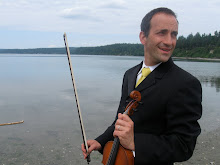
Dear Parent & Child Families,
I will be offering a 6 week summer playgroup very similar to my nursery class (for children without their parents). Follow this link for a brochure and details.
Thanks,
William
Monday, April 4, 2011

Friday, April 1, 2011
Verses and Welcome to the Spring Session
Dear Families,
Welcome to our Spring session of our parent & child classes at the Whidbey Island Waldorf School. I look forward to seeing you these first 2 weeks of April (March 31, April 1, April 7, and April 8) and then again for 6 additional Thursdays and Fridays between April 28 and June 3.
For families new to our program, this synopsis of the parent & child morning may help provide a sense of what your child and you will experience each week. We try to make the class meet the needs of the children and parents, so I will adjust the rhythm if, for example, the class has more younger or older children. Over the years, I have witnessed children of many ages thrive in a rhythm like the one described.
Here is additional information about our program:
Our classes take place in the Butterfly Room, the first room you come to when you go down the stairs in the main building.
Vegetables and Extra Clothes -- We will make vegetable soup and bread every week; children love to explore, play, and help when their parents and teacher join together in community work such as cooking. Please bring a vegetable if possible. Our classes try to make activities such as washing dishes inviting for children (and their parents). While I try to keep splashing to a reasonable level, your child may get very wet. Please bring a change of clothes.
Children will do well to have slippers or thick socks--we try to leave our wet and muddy boots out of the play area.
Here are songs and verses I say throughout the morning.
Here are the spring verses and songs that I present before snack time.
Here are the lyrics to the songs I sing while we dance the Maypole.
As I hope the previous article suggested, you need feel no compulsion to sing any of these songs at home. I place them out there so they are available for when the time is right.
With warmth and light,
William Geoffrey Dolde
Welcome to our Spring session of our parent & child classes at the Whidbey Island Waldorf School. I look forward to seeing you these first 2 weeks of April (March 31, April 1, April 7, and April 8) and then again for 6 additional Thursdays and Fridays between April 28 and June 3.
For families new to our program, this synopsis of the parent & child morning may help provide a sense of what your child and you will experience each week. We try to make the class meet the needs of the children and parents, so I will adjust the rhythm if, for example, the class has more younger or older children. Over the years, I have witnessed children of many ages thrive in a rhythm like the one described.
Here is additional information about our program:
Our classes take place in the Butterfly Room, the first room you come to when you go down the stairs in the main building.
Vegetables and Extra Clothes -- We will make vegetable soup and bread every week; children love to explore, play, and help when their parents and teacher join together in community work such as cooking. Please bring a vegetable if possible. Our classes try to make activities such as washing dishes inviting for children (and their parents). While I try to keep splashing to a reasonable level, your child may get very wet. Please bring a change of clothes.
Children will do well to have slippers or thick socks--we try to leave our wet and muddy boots out of the play area.
Here are songs and verses I say throughout the morning.
Here are the spring verses and songs that I present before snack time.
Here are the lyrics to the songs I sing while we dance the Maypole.
As I hope the previous article suggested, you need feel no compulsion to sing any of these songs at home. I place them out there so they are available for when the time is right.
With warmth and light,
William Geoffrey Dolde
Thursday, March 31, 2011
Essentials of Waldorf Early Childhood Education
Dear Nursery and Parent & Child Families,
Over the past couple of months I have had several discussions with parents about traditions in Waldorf early childhood classrooms--specifically, that what you find in one Waldorf school you may not find in another, and that the point is not that the teachers are following a fixed schedule or list of activities, but that they are observing the children and working out of a picture of child development guided by the insights of Rudolf Steiner and creating a rhythm and environment that serves the children. We were also discussing that parents need not feel they have to do exactly "this" or "that" to be Waldorf parents (indeed, Eugene Schwartz makes fun of this concept that schools and teachers have unintentionally created, that there is only one way to parent to be a "Waldorf" parent), or to have exactly the same rules or approaches in every home--but rather that the parents, like the teachers, observe their children with presence and foster a loving environment that helps that child. In this light, it is OK if one home varies from another.
In the article below, Susan Howard--the chair of the Waldorf Early Childhood Association of North America--describes the essentials of Waldorf Early Childhood Education.
http://www.iaswece.org/waldorf_education/what_is.aspx
Among the many aspects of the article I like is that Howard is able to bring the words of Waldorf education's founder, Rudolf Steiner, to light in description of various elements (love and warmth, free play, working out of imitation, adults on a path of inner development) important to Waldorf early childhood education. She also cautions us as teachers (and I would add as parents) against doing something just because every other teacher (or parent) before has done it; if in our observation and meditations it does not seem like the right activity (or if other activities fulfill the same role), we need not do it just because everyone else has.
I remember being in teacher training and hearing teachers share some of the best practices from teachers they were working with. A lot of wonderful ideas and inspirations came pouring into the room. I also sensed dread and anxiety mounting in the room as new teachers wondered how they would fit every best practice into their rhythm of the day. If they did, the day would be so stressful and hurried, no one would be nourished. At that boiling brew of ideas, I began to focus on descriptions of what experienced teachers were not doing, of what it was OK not to do. I thought of a quote I had read as I was entering public early childhood education a few years before--"The most important thing is to know when to keep your mouth shut"--and postulated for myself a Waldorf phrase, "The most important thing is to know that you don't have to try to fit everything in." Over the years, I marvel at the amount of activities I have allowed to slip away as I find my path toward what is essential in early childhood. I have a long way to go.
Howard also touches upon our ongoing discussion of the balance between form and freedom, of the benefit of working of out of imitation and not explanation in the first seven years.
Finally, Susan Howard also makes clear that Waldorf education is not anything goes; our manner toward the children grows out of observation, presence, research, and meditation.
With warmth and light,
William Geoffrey Dolde
Over the past couple of months I have had several discussions with parents about traditions in Waldorf early childhood classrooms--specifically, that what you find in one Waldorf school you may not find in another, and that the point is not that the teachers are following a fixed schedule or list of activities, but that they are observing the children and working out of a picture of child development guided by the insights of Rudolf Steiner and creating a rhythm and environment that serves the children. We were also discussing that parents need not feel they have to do exactly "this" or "that" to be Waldorf parents (indeed, Eugene Schwartz makes fun of this concept that schools and teachers have unintentionally created, that there is only one way to parent to be a "Waldorf" parent), or to have exactly the same rules or approaches in every home--but rather that the parents, like the teachers, observe their children with presence and foster a loving environment that helps that child. In this light, it is OK if one home varies from another.
In the article below, Susan Howard--the chair of the Waldorf Early Childhood Association of North America--describes the essentials of Waldorf Early Childhood Education.
http://www.iaswece.org/waldorf_education/what_is.aspx
Among the many aspects of the article I like is that Howard is able to bring the words of Waldorf education's founder, Rudolf Steiner, to light in description of various elements (love and warmth, free play, working out of imitation, adults on a path of inner development) important to Waldorf early childhood education. She also cautions us as teachers (and I would add as parents) against doing something just because every other teacher (or parent) before has done it; if in our observation and meditations it does not seem like the right activity (or if other activities fulfill the same role), we need not do it just because everyone else has.
I remember being in teacher training and hearing teachers share some of the best practices from teachers they were working with. A lot of wonderful ideas and inspirations came pouring into the room. I also sensed dread and anxiety mounting in the room as new teachers wondered how they would fit every best practice into their rhythm of the day. If they did, the day would be so stressful and hurried, no one would be nourished. At that boiling brew of ideas, I began to focus on descriptions of what experienced teachers were not doing, of what it was OK not to do. I thought of a quote I had read as I was entering public early childhood education a few years before--"The most important thing is to know when to keep your mouth shut"--and postulated for myself a Waldorf phrase, "The most important thing is to know that you don't have to try to fit everything in." Over the years, I marvel at the amount of activities I have allowed to slip away as I find my path toward what is essential in early childhood. I have a long way to go.
Howard also touches upon our ongoing discussion of the balance between form and freedom, of the benefit of working of out of imitation and not explanation in the first seven years.
Finally, Susan Howard also makes clear that Waldorf education is not anything goes; our manner toward the children grows out of observation, presence, research, and meditation.
With warmth and light,
William Geoffrey Dolde
Tuesday, March 29, 2011
Prewelcome to the Spring Session
Dear Families,
I look forward to seeing you this Thursday and Friday. I want to wait to send a longer welcome (with song lyrics, words to my rhymes, and reminder of the rhythm of the day) because a few families are still in the process of enrolling, and I want to make sure they receive the information they need.
We will continue to make soup and bread. Thanks for bringing vegetables and empty jars.
The spring session brings the Maypole, the bird symphony in the woods, and garden friends visiting a flower.
Please note that we will have two weeks of class (March 31 and April 1; and April 7 and 8). Then our school will be closed for two sets of parent & child classes; no classes on April 14 and 15 or April 21 and 22. We will resume on April 28 and 29. Have no worries about fees not reaching far enough; the two week break was taken into account when establishing the pricing for each session.
I will write more soon. If you are returning and have not made clear your intentions to our enrollment office, please do so as soon as possible.
Thanks,
William Dolde
Wdolde at gmail.com
I look forward to seeing you this Thursday and Friday. I want to wait to send a longer welcome (with song lyrics, words to my rhymes, and reminder of the rhythm of the day) because a few families are still in the process of enrolling, and I want to make sure they receive the information they need.
We will continue to make soup and bread. Thanks for bringing vegetables and empty jars.
The spring session brings the Maypole, the bird symphony in the woods, and garden friends visiting a flower.
Please note that we will have two weeks of class (March 31 and April 1; and April 7 and 8). Then our school will be closed for two sets of parent & child classes; no classes on April 14 and 15 or April 21 and 22. We will resume on April 28 and 29. Have no worries about fees not reaching far enough; the two week break was taken into account when establishing the pricing for each session.
I will write more soon. If you are returning and have not made clear your intentions to our enrollment office, please do so as soon as possible.
Thanks,
William Dolde
Wdolde at gmail.com
Tuesday, March 22, 2011
Flowering Branches
Dear Nursery and Parent & Child Families,
As we transform the shelter in which Mother Earth will sit on Friday, it has occurred to both Lynne and me how nice it would be to decorate with some branches from a flowering tree.
If any of you have such a tree in blossom now and wouldn't mind pruning a branch or two to share, I would be very thankful. My ideal would be that this extra decoration would be a surprise to the children (I'll set it up Thursday afternoon), so if you are a nursery family and could drop off branches in the boiler room after dropping off your child Wednesday, that would be great. You could bring them directly to my classroom on Thursday, as well.
Thanks,
William
As we transform the shelter in which Mother Earth will sit on Friday, it has occurred to both Lynne and me how nice it would be to decorate with some branches from a flowering tree.
If any of you have such a tree in blossom now and wouldn't mind pruning a branch or two to share, I would be very thankful. My ideal would be that this extra decoration would be a surprise to the children (I'll set it up Thursday afternoon), so if you are a nursery family and could drop off branches in the boiler room after dropping off your child Wednesday, that would be great. You could bring them directly to my classroom on Thursday, as well.
Thanks,
William
Monday, March 21, 2011
Eugene Schwartz Lecture
Dear Families,
The Kathrine Dickerson Memorial Library has a number of cds of lectures by both Kim John Payne (of whom I make frequent reference) and by the very experienced Waldorf Class Teacher Eugene Schwartz. Schwartz does an excellent job of relating the ideas of Rudolf Steiner to the practice of Waldorf Education--and in some instances, parenting.
I recently listened to his lecture 116--"Freedom of Choice, or Freedom from Choice" and want to recommend it to you (I am returning it to the library tomorrow). When I listened, it seems Schwartz's topic helped a great deal to help us as parents find the middle ground between form and freedom--what we talked about and I wrote about in relationship to manners from our parent discussion several Tuesdays ago. He describes child development in light of Anthroposophy and world history--and exhorts us as parents to realize our children benefit from different forms of discipline in different developmental periods (though as a father of 4 himself, he knows it is not easy, and that sometimes we borrow from another phase of parenting). As much as possible, we work out of imitation in the first seven years. Even as we are working to establish healthy habits in the first seven years, Schwartz encourages us to try to do this by looking at ourselves as role models and in the environments we place our children in; ideally, according to Schwartz, we need not say "no" to our children in the first 7 years because we have structured ourselves and the environment to guide children naturally toward right behavior (Schwartz acknowledges that this is easier said than done).
For children in the grades, the teacher of parent guides the children not through imitation, but through authority. The adult is like a monarch (not a dictator or authoritarian). Like I speak of elsewhere, children want to know that the captain of the ship is confident and has a sense of where the ship is going, that the Queen will feels competent to govern her home.
In both developmental phases, children receive a great gift from us if we can limit the amount of choices we give them. Too many choices too soon can paralyze a child--and eventually wake up faculties (the astral body) that are better suited to serve adolescence (and ideally to be awakened at age 35). Children want to know that we adults understand what is right; they feel cheated if we hand over decision making powers to them too soon.
Schwartz is a compelling speaker, and I recommend you listen to his lecture yourself. Of particular note, again, is his ability to introduce us to concepts from Steiner that might seem obscure in other contexts.
With warmth and light,
William Geoffrey Dolde
The Kathrine Dickerson Memorial Library has a number of cds of lectures by both Kim John Payne (of whom I make frequent reference) and by the very experienced Waldorf Class Teacher Eugene Schwartz. Schwartz does an excellent job of relating the ideas of Rudolf Steiner to the practice of Waldorf Education--and in some instances, parenting.
I recently listened to his lecture 116--"Freedom of Choice, or Freedom from Choice" and want to recommend it to you (I am returning it to the library tomorrow). When I listened, it seems Schwartz's topic helped a great deal to help us as parents find the middle ground between form and freedom--what we talked about and I wrote about in relationship to manners from our parent discussion several Tuesdays ago. He describes child development in light of Anthroposophy and world history--and exhorts us as parents to realize our children benefit from different forms of discipline in different developmental periods (though as a father of 4 himself, he knows it is not easy, and that sometimes we borrow from another phase of parenting). As much as possible, we work out of imitation in the first seven years. Even as we are working to establish healthy habits in the first seven years, Schwartz encourages us to try to do this by looking at ourselves as role models and in the environments we place our children in; ideally, according to Schwartz, we need not say "no" to our children in the first 7 years because we have structured ourselves and the environment to guide children naturally toward right behavior (Schwartz acknowledges that this is easier said than done).
For children in the grades, the teacher of parent guides the children not through imitation, but through authority. The adult is like a monarch (not a dictator or authoritarian). Like I speak of elsewhere, children want to know that the captain of the ship is confident and has a sense of where the ship is going, that the Queen will feels competent to govern her home.
In both developmental phases, children receive a great gift from us if we can limit the amount of choices we give them. Too many choices too soon can paralyze a child--and eventually wake up faculties (the astral body) that are better suited to serve adolescence (and ideally to be awakened at age 35). Children want to know that we adults understand what is right; they feel cheated if we hand over decision making powers to them too soon.
Schwartz is a compelling speaker, and I recommend you listen to his lecture yourself. Of particular note, again, is his ability to introduce us to concepts from Steiner that might seem obscure in other contexts.
With warmth and light,
William Geoffrey Dolde
Thursday, March 17, 2011
Spring Festival, Friday March 25
Dear Families,
Please consider attending our Butterfly, Rosebud, and Dewdrop Spring Festival on Friday, March 25, from 9 to 10:30am. Please invite friends as well. This is open to the community.
Location: Outside the Butterfly Classroom and in the woods nearby, Whidbey Island Waldorf School.
Invited Guests: In addition to current Butterfly, Rosebud, and Dewdrop children and parents, friends, and grandparents, we invite all families with young children to attend.
This is mainly an outdoor festival. Be prepared for the weather.
Brief Synopsis This festival provides an imaginative picture of how seasons change. Young children can experience the changing seasons as a vivid drama. After a puppet show, we will walk to meet Mother Earth, Father Sun, Brother Wind, and Sister Rain. After the walk, we will return to the playground for snacks, play, and conversation. If weather permits, I will end our festival with fiddle tunes and dancing outside.
Why a Festival? There are a number of good books about festivals in the Kathrine Dickerson Memorial Library (in the lobby of our school). Here also is an article written by an experienced kindergarten teacher from Santa Cruz Steve Spitalny about festivals. Although Steve is writing for teachers in this article, he helps us as parents as well simplify and clarify our thinking about marking the seasons of the year to support our children. Festivals can be seeds of renewal, to help children adults frame the year.
Music While there may be more songs, here are lyrics to two songs we will sing often.
Please call 341-5686 or contact wdolde at gmail.com with any questions.
With warmth and light,
William Geoffrey Dolde
Please consider attending our Butterfly, Rosebud, and Dewdrop Spring Festival on Friday, March 25, from 9 to 10:30am. Please invite friends as well. This is open to the community.
Location: Outside the Butterfly Classroom and in the woods nearby, Whidbey Island Waldorf School.
Invited Guests: In addition to current Butterfly, Rosebud, and Dewdrop children and parents, friends, and grandparents, we invite all families with young children to attend.
This is mainly an outdoor festival. Be prepared for the weather.
Brief Synopsis This festival provides an imaginative picture of how seasons change. Young children can experience the changing seasons as a vivid drama. After a puppet show, we will walk to meet Mother Earth, Father Sun, Brother Wind, and Sister Rain. After the walk, we will return to the playground for snacks, play, and conversation. If weather permits, I will end our festival with fiddle tunes and dancing outside.
Why a Festival? There are a number of good books about festivals in the Kathrine Dickerson Memorial Library (in the lobby of our school). Here also is an article written by an experienced kindergarten teacher from Santa Cruz Steve Spitalny about festivals. Although Steve is writing for teachers in this article, he helps us as parents as well simplify and clarify our thinking about marking the seasons of the year to support our children. Festivals can be seeds of renewal, to help children adults frame the year.
Music While there may be more songs, here are lyrics to two songs we will sing often.
While the children often find the festival more magical and nourishing if they can have the experience without explanation beforehand, this more detailed description for adults will prepare to help if needed (please do not share with children).
9 to 9:30am Children and parents come to the playground outside the Butterfly classroom. Bread and butter, water, and herbal tea will be available in the shelter. Children play and/or eat.
9:40am I will lead you into the Butterfly Classroom and will present a puppet show (children can keep shoes and coats on; we are going right back outside).
9:50am William will lead us into the woods to the teepee (the walk is 200 yards at the most). There, Mother Earth will silently greet us. She will present William with a fiber pot and plant a seed into the pot. Ideally, Mother Earth will present a pot and seeds to each child. If there are many children, and the waiting seems too stressful, William (and other parents) will help. It is nice, however, if things do not feel rushed. Some children, of course, may be intimidated by Mother Earth, so a parent could receive the gift for the child. Be prepared to help your child carry the pot. We will have extra potting soil and seeds at the end of the walk if, as is possible, your child's pot spills. We thank Mother Earth.
9:55am (or so) We walk out of the woods. Father Sun greets us.
10am (or so) We walk farther. Sister rain greets us by the fountain and waters our pots.
10:05am (or so) Back at the playground, Brother Wind greets us and presents us with a large spring cloth for dancing. We thank Brother Wind. Unless it is bitterly cold, William will play the fiddle as parents and children dance with the large cloth from Brother Wind.
10:15am Children play some more, children and parents eat more snack. Each child is welcome to take home a pot. There will be extra in case one is misplaced or spilled
10:30am Children and parents depart. Beginning at 10:45am or sooner, elementary children come outside for recess, and it will be good to leave them space.
With warmth and light,
William Geoffrey Dolde
Subscribe to:
Posts (Atom)