
Dear Current Rosebud and Dewdrop Families, Friends, Alums, and Prospective Families,
You and your child(ren) are invited to our Spring Festival on Thursday, March 12, from 9:30 to 10:30am. It is an outdoor festival; we will get to meet Spring whether she presents herself as a lion or a lamb. Children and parents will gather on the playground and shelter where I will serve warm bread and chamomile tea; although we will not have soup, families are invited to bring crunchy vegetables to share.
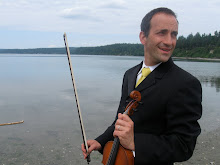
At about 9:45am, we will take a short walk into the woods (alas, most strollers will not fit on the trails; ergos and other carriers will). There we will meet Mother Earth, Father Sun, Brother Wind, and Sister Rain; these friendly characters may even give us gifts. After the walk, we will return to the playground for more snacks, play, and conversation. If weather permits, I will end our festival with fiddle tunes and dancing outside.
There are a number of good books about festivals in the Kathrine Dickerson Memorial Library. Here also is an article written by an experienced kindergarten teacher from Santa Cruz Steve Spitalny about festivals. Although Steve is writing for teachers in this article, he helps us as parents as well simplify and clarify our thinking about marking the seasons of the year to support our children.
Here is a reminder for current parent & child families about our snow delay policy (snow is in the forecast this week). Please check www.schoolreport.org or call our school--360-341-5686. We follow the South Whidbey Public School decisions. If schools are delayed one hour, our parent & child classes will take place as usual, beginning at 9am. If schools are delayed two hours, our parent & child classes will begin at 10am and go until noon. If schools are closed, parent & child classes are cancelled, and you will receive a credit for that class.
With warmth and light,
William Geoffrey Dolde
Wednesday, February 25, 2009

Saturday, February 14, 2009
Schedule Reminder
Dear Dewdrop and Rosebud Families,
Here is a reminder of upcoming dates:
No classes February 19 & 20.
2 weeks of classes February 26 & 27, March 5 & 6.
No classes March 12 & 13.
A festival open to all parent & child families, alums, friends, relatives, community members, Thursday, March 12, 9:30am, outside the Butterfly Room. We will walk into the woods to look for Spring and perhaps meet Mother Earth, Father Sun, Sister Rain, and Brother Wind.
Final classes of the winter session: March 19 & 20.
The spring session commences on March 26 & 27.
Feel free to contact me if confusion persists.
With warmth and light,
William Geoffrey Dolde
Wednesday, February 11, 2009
Simplicity and Spring Cleaning
Dear Families,
I hope many adults are able to attend tonight (Wednesday's) lecture on Simplicty Parenting by Kim Payne. In his talk he often exhorts parents to remove clutter from their child's physical environment and schedule. As I think about cleaning and clarifying, I am reminded of an article by Linda Thomas on chaos and cleaning and caring. As head house mother of the Goetheanum in Switzerland, in charge of keeping a center of spiritual and altruistic thought tidy, Thomas developed great insights into the spiritual aspects of, say, cleaning a toilet. She is an inspiring speaker, and her article alone has helped parents find new rewards in what were formerly odious tasks. Rather than becoming a distraction from parenting or personal growth, cleaning can become an aspect of our personal growth through parenting (much the argument of Whole Child/Whole Parent, an excellent book available in the Kathrine Dickerson Memorial Library).
As we remove clutter from our children's lives, we want to be careful to preserve the right for our children to encounter and overcome and learn from obstacles. Last week I showed the rest of the faculty video footage of infants and toddlers interacting at Loczy in Budapest. The faculty showed interest in what I narrated and what they observed. A colleague asked what I thought about the apparent clutter in the play room the infants at Loczy shared. I remarked that the Pikler and Gerber work reminds us to refrain from cleaning everything up right away to make things easy for the infants and toddlers. Infants and toddlers learn something as they try to crawl or walk or climb through and around all the toys on the playroom floor, and the nurses (and RIE teachers in America) are careful to refrain from clearing everything out of the way to make things easy. When left to develop with loving attention and trust, infants and toddlers will amaze us with what they are able to accomplish.
Joan Almon, Waldorf teacher of early childhood teachers and head of the Alliance for Childhood, writes with eloquence of the fluid play scenarios of the 3 to 5 year old. A 4 year old may have toys scattered about the house and have seemed to switch from playing boats to cats to dolls to tea party to dragons to construction to bus driving. When a parent suggests the child put away a toy from several scenarios ago, the child might object, "I'm still playing with that!" because, in the fluid, developing attention span of the 3 to 5 year old, the child is still playing with it. This Protean flow, rather than being a diversion from the development of attention span, is the way the 3 to 5 year old develops attention span. While we as parents and teachers help our children by bringing form to their surroundings, we also help then by becoming a bit comfortable with chaos, clutter, and challenge.
This reminds me of an interaction with a girl in the nursery class today. Many nursery children have become interested in washing dishes of late, and the more children there are, the more likely it is that someone will get wet. Rather than changing this girl's shirt right away, I offered her a couple of towels to dry herself with. She became very engaged with drying herself and then a classmate, and deep attention and cooperation were in the process of developing. Whereas at the beginning of the year becoming wet might have paralyzed her, now it gave her an opportunity to work and bond and imagine. We give gifts by what we as adults do and don't do. To paraphrase Kim Payne quoting something else, sometimes in a heated situation or crisis our presence is enough. The message to adults: Don't just do something, stand there!
With warmth and light,
William Dolde
I hope many adults are able to attend tonight (Wednesday's) lecture on Simplicty Parenting by Kim Payne. In his talk he often exhorts parents to remove clutter from their child's physical environment and schedule. As I think about cleaning and clarifying, I am reminded of an article by Linda Thomas on chaos and cleaning and caring. As head house mother of the Goetheanum in Switzerland, in charge of keeping a center of spiritual and altruistic thought tidy, Thomas developed great insights into the spiritual aspects of, say, cleaning a toilet. She is an inspiring speaker, and her article alone has helped parents find new rewards in what were formerly odious tasks. Rather than becoming a distraction from parenting or personal growth, cleaning can become an aspect of our personal growth through parenting (much the argument of Whole Child/Whole Parent, an excellent book available in the Kathrine Dickerson Memorial Library).
As we remove clutter from our children's lives, we want to be careful to preserve the right for our children to encounter and overcome and learn from obstacles. Last week I showed the rest of the faculty video footage of infants and toddlers interacting at Loczy in Budapest. The faculty showed interest in what I narrated and what they observed. A colleague asked what I thought about the apparent clutter in the play room the infants at Loczy shared. I remarked that the Pikler and Gerber work reminds us to refrain from cleaning everything up right away to make things easy for the infants and toddlers. Infants and toddlers learn something as they try to crawl or walk or climb through and around all the toys on the playroom floor, and the nurses (and RIE teachers in America) are careful to refrain from clearing everything out of the way to make things easy. When left to develop with loving attention and trust, infants and toddlers will amaze us with what they are able to accomplish.
Joan Almon, Waldorf teacher of early childhood teachers and head of the Alliance for Childhood, writes with eloquence of the fluid play scenarios of the 3 to 5 year old. A 4 year old may have toys scattered about the house and have seemed to switch from playing boats to cats to dolls to tea party to dragons to construction to bus driving. When a parent suggests the child put away a toy from several scenarios ago, the child might object, "I'm still playing with that!" because, in the fluid, developing attention span of the 3 to 5 year old, the child is still playing with it. This Protean flow, rather than being a diversion from the development of attention span, is the way the 3 to 5 year old develops attention span. While we as parents and teachers help our children by bringing form to their surroundings, we also help then by becoming a bit comfortable with chaos, clutter, and challenge.
This reminds me of an interaction with a girl in the nursery class today. Many nursery children have become interested in washing dishes of late, and the more children there are, the more likely it is that someone will get wet. Rather than changing this girl's shirt right away, I offered her a couple of towels to dry herself with. She became very engaged with drying herself and then a classmate, and deep attention and cooperation were in the process of developing. Whereas at the beginning of the year becoming wet might have paralyzed her, now it gave her an opportunity to work and bond and imagine. We give gifts by what we as adults do and don't do. To paraphrase Kim Payne quoting something else, sometimes in a heated situation or crisis our presence is enough. The message to adults: Don't just do something, stand there!
With warmth and light,
William Dolde
Wednesday, February 4, 2009
Looking ahead to the Nursery
Dear Rosebud and Dewdrop Families,
You may also find these reflections from Whole Child/Whole Parent (linked to in a previous session) helpful.
Because many of you plan to join our Butterfly nursery next year or in a future, I thought I'd pass along some thoughts about rain and snow gear that are always too late for the current nursery families. We are blessed to be surrounded by woods. Not only do walks (climbs and runs) foster the development of initiative and autonomy amongst the nursery children, but the many clearings we visit provide different materials and scenarios for cooperative and imaginative play. Inside Waldorf early childhood classrooms, we bring in natural materials to spur children's imagination. At the Whidbey Island Waldorf School, we are so fortunate to bring the children outside to a variety of outdoor rooms, stocked with the makings of forts, fairy houses, bridges, caves, pretend ovens, and the like. While the nursery children play well and imaginatively indoors, often their ability to imagine and cooperate soars when they are outside.
While my experience finds that a mainly or entirely indoor class works well for parent & child classes, the nursery children thrive when we have generous amounts of time outside every day--sometimes as much as two hours if the weather permits (and it has been very mild and dry of late). Even when the weather is dry as it has been of late, children wear rain pants and boots every day from late September to early May. Getting dressed becomes part of the habit and part of the learning process--as children develop a sense of autonomy and competence. While warmth is important, and while you could find many articles about warmth in Waldorf periodicals, I think it important to remember that autonomy and initiative and industry (terms from Erik Erikson) are important parts of the nursery years. Some children who get dressed or undressed with confidence and grace when wearing slightly lighter clothes (rain pants and rain boots) resist getting dressed when provided with snow boots and snow pants. While we want your child to be comfortable next year, take into account your child's sense of accomplishment when selecting gear next year. Lighter outer clothes over multiple indoor layers may not work for all children, but some nursery children seem quite comfortable outside and heartened by their ability to dress themselves.
Also consider, as you think about procuring clothes for next year, what might give your child support as she or he uses the bathroom independently. Although snow pants with bibs keep children very warm, for a child just learning to use the toilet, the extra time for taking them off (and the coat) in a emergency can make hard to get clothes off quickly enough. If you already have your wet and cold weather clothes for next year, I am not asking you to spend more money to change things. My assistant and I patiently help children with their gear, and all the nursery children enjoy the outdoors whether they get ready quickly or slowly. I provide this advance information with the hope that it will help some parents.
With warmth and light,
William Geoffrey Dolde
Thursday, January 29, 2009
Calendar, Joseph Chilton Pearce on Toddlerhood
Dear Families,
Here is a reprise from the welcome letter of closures:
No classes February 19 & 20 -- school closed for February break and Waldorf teacher conferences.
No classes March 12 & 13 -- early childhood classrooms in use for Grandparents' and Special Friends day.
(We took these closures into account when setting the fee for the Winter session. There are 8 regular Rosebud and Dewdrop classes.)
Spring Festival open to all parent & child families and open to the greater Whidbey community, Thursday, March 12, 9:30am. We will gather outside, take a walk, and meet Mother Earth, Father Sun, Sister Rain, and Brother Wind. The festival will conclude by or before 10:30am.
Joseph Chilton Pearce on Toddlers
Last week there was a good discussion about balancing our growing children's desire and need to explore with our need to keep them safe. While healthy and consistent (and age appropriate) limits are healthy, it also helps our child and helps keep us sane if we can find appropriate ways for them to learn about the world--and toddlers learn about the world through climbing, running, tumbling, slamming, wrestling, building, toppling, throwing, splashing, and breaking. As Rahima Baldwin writes in "Rhythm and Discipline in Home Life," the first Waldorf kindergarten teachers found it most effective to find an acceptable outlet for something she needed to forbid--ideally before the children even thought of trying the forbidden activity.
Using brain research, Joseph Chilton Pearce describes the toddler's innate need to explore and learn in "The Cycle of Competence" and "Will and the Terrible Two." Because you may need to download and/or print the above selections in order to view them, here is a synopsis of Pearce's argument. As book such as The Scientist in the Crib would suggest, from birth children are "wired" to explore and learn about the world, to develop connections in their brain. The most profound way they do this is in their bonds with parents and other primary caregivers. Another important way is through free movement and exploration in the environment. Children do not open and close the cabinets or try to open the oven to annoy us (at least at first). They are following a divine and spiritual plan to learn about everything.
Because children have such a strong bond with their parents and and such a strong desire to learn from everything, toddlers find themselves pulled in two directions at once. Pearce describes how a toddler may pause and look at a parent saying, for example, "Don't touch the oven. It is hot!" The toddler, after pausing, proceeds to touch the oven, causing pain in the toddler and dismay in the parent. "He looked right at me and then ignored me!" Pearce advises us to reframe our way of viewing this. The toddler's pause and then apparent disobedience are not, Pearce says, a challenge to us, a toddler pausing to say a la Clint Eastwood, "Go ahead. Make my day." The toddler, rather, has not yet developed control of his will yet and is being carried along by two strong forces: one, always having to explore and learn about everything; the other, wanting to maintain this strong bond with a parent and primary caregiver. The toddler wants to strengthen the bond with mom or dad--hence the pause--but also feels driven to keep exploring--hence the apparent disobedience.
This does not mean we as parents should let our children turn on the oven, drive our cars, and practice with a welding torch just because they have a lot to teach us (though we may find with less dangerous forms of exploration such as climbing, cutting, and jumping we can find ways for the children to challenge themselves without coming into undo harm). Limits and boundaries are healthy. What Pearce and others help us remember is that we should also expect our young children (up to six or seven) to forget our boundaries and need patient reminders. As Sharifa Oppenheimer writes, when we are redirecting our children or setting a limit, our words will be much more effective at guiding our children when we use the same tone we would for a statement such as, "Here's the towel." If we steadfastly refrain from transforming our toddlers' need to explore into power struggles, we may find ourselves able to guide them while staying calmer ourselves. Although it is healthy for children to see a diversity of emotions from parents and learn that it is OK to be sad, glad, angry, and anxious, if we provide ostentatious or explosive reactions to our children's forbidden explorations, we may inadvertently foster the development of a young social scientist: "If I do this, Dad explodes like this. Boy, I wonder what Dad would do if I do this!"
Children do need limits. It is helpful if we state them positively, telling the child what she or me may do, or--even better--stating in a general way what is the appropriate thing to do. When mentoring other teachers, I have observed them at a time when a child is disruptive say, "Joe, you may be quiet now," only to have Joe experiment with how long he can be noisy before the teacher does something else. A power struggle begins. I have asked the teachers to consider a phrase such as, "This is the right time to be quiet," or "When we are all quiet, the beauty of silence can come" or "It is polite to listen quietly or sing along." Teachers have reported back that these phrases (and the gesture they implied) have reduced power struggles dramatically and invited more compliance. When a power struggle does emerge with an older toddler or kindergartner and our child needs a cooling off period, Rahima Baldwin advises us to leave the room with the child rather than sending them off by themselves (the chapter in discipline in Hold on to Your Kids follows a similar approach). We stay with the child calmly without lecturing (long tirades tend not to penetrate and may be entertaining) and sit in a calm and boring manner with our child. After a minute to 3, we say, "Let's go try that again" or "We'll do that again in a polite way" or "The kings and queens have been called to the table. I'll be queen and you be king." Young children live and think in pictures, and when we can garner the resources to create living pictures as we guide them, we may find ourselves more effective.
I hope this is helpful. In a follow-up conversation with the parent who sent me to read Pearce again, the parent reported having adjusted the location of some furniture in the kitchen, permitting climbing in a certain area, and redirecting the exploration there. It sounded as if the parent and child were both satisfied--the child could explore; the parent could ensure safety; it was no longer a power struggle.
If you have trouble downloading the selections, they are available in Evolution's End, available in the Kathrine Dickerson Memorial Library.
With warmth and light,
William Geoffrey Dolde
Tuesday, January 13, 2009
Welcome to the Winter Session
Dear Families,
Here is a link to our welcome letter for the new session. It contains information about parking, school closures, and the dates for our session. Here is a rhythm of the morning with some details about what informs my decisions about to include in the morning's work and play. I distributed printed copies of this at our orientation.
Here are lyrics to many of the songs I sing throughout the morning. I have no expectation that families will sing these songs at home. My hope is that parents feel inspired to sing for and with their children, whether songs from school, the Beatles, or Mozart.
At the orientation, several parents showed interest in an article I was preparing for nursery families about responding to children's questions. I have posted the article outside the classroom door, and here is an electronic copy of it.
With warmth and light,
William Geoffrey Dolde
Tuesday, December 16, 2008
Thank you for the Advent Spiral, looking ahead
Dear Families,
If you are new to our parent & child program or are inquiring about the program, please also visit the 2009 blog for our parent & child classes. You are welcome to look back through this blog to find archives of articles.
Thank you for so many of you for attending our Advent Spiral Saturday morning. I have sent off the stars we gathered for our classmate who could not be there. Some of you have written very positive feedback about the event, which makes it likely I will organize a similar festival next December.
Be aware of the weather this week. You can check www.schoolreport.org and follow the headings to South Whidbey school district to see their school closure decisions. We follow their lead. I will also try to contact you if you do not have older children in the school. If your contact information has changed, please let me know.
If South Whidbey Schools are delayed an hour, we can still have our parent & child classes at 9am (an hour delay for the rest of our school).
For this week only as an experiment, if South Whidbey schools are delayed two hours, let's try having our Thursday class at 10 until noon. It is such a long break it seems a shame to cancel class as long as we can try being a little flexible. If South Whidbey schools are closed, we will cancel class and you will be credited for it.
On Friday, we have to begin and end class early so that parents and teacher can proceed to the Christmas Festival at the Whidbey Institute by 10:30am. Come as soon as you drop off your older children. Because we cannot have class late, we will have to cancel this Friday's class if South Whidbey Schools are delayed (though I would be glad to have you visit for an hour from 9 to 10, even if we don't have time for our full class).
The holiday season can bring joy. It can also bring stress. I find this chapter from Mitten Strings for God helpful as I attempt to find the right endeavor and attempt what is doable and nourishing rather than becoming overwhelmed.
With warmth and light,
William Geoffrey Dolde
If you are new to our parent & child program or are inquiring about the program, please also visit the 2009 blog for our parent & child classes. You are welcome to look back through this blog to find archives of articles.
Thank you for so many of you for attending our Advent Spiral Saturday morning. I have sent off the stars we gathered for our classmate who could not be there. Some of you have written very positive feedback about the event, which makes it likely I will organize a similar festival next December.
Be aware of the weather this week. You can check www.schoolreport.org and follow the headings to South Whidbey school district to see their school closure decisions. We follow their lead. I will also try to contact you if you do not have older children in the school. If your contact information has changed, please let me know.
If South Whidbey Schools are delayed an hour, we can still have our parent & child classes at 9am (an hour delay for the rest of our school).
For this week only as an experiment, if South Whidbey schools are delayed two hours, let's try having our Thursday class at 10 until noon. It is such a long break it seems a shame to cancel class as long as we can try being a little flexible. If South Whidbey schools are closed, we will cancel class and you will be credited for it.
On Friday, we have to begin and end class early so that parents and teacher can proceed to the Christmas Festival at the Whidbey Institute by 10:30am. Come as soon as you drop off your older children. Because we cannot have class late, we will have to cancel this Friday's class if South Whidbey Schools are delayed (though I would be glad to have you visit for an hour from 9 to 10, even if we don't have time for our full class).
The holiday season can bring joy. It can also bring stress. I find this chapter from Mitten Strings for God helpful as I attempt to find the right endeavor and attempt what is doable and nourishing rather than becoming overwhelmed.
With warmth and light,
William Geoffrey Dolde
Subscribe to:
Posts (Atom)