As some to many of you know, a beloved 4 year old in our community passed away on Tuesday. She was part of our parent & child program and played and danced throughout my nursery class last year. It was a blessing to me to know her. For 2 years, she and her parents lived with a brain tumor, surgeries, treatments, and difficult choices. This beautiful child died in her sleep with her parents beside her.
On Friday, I will not be present at Castle Park for our informal gathering at 11:30am. I will be visiting this child's home and then attending the funeral. I encourage you to gather at the park without me. I think it will bring joy as this child returns to her work in the spiritual world to see community here on earth.
If you want more details, please contact me at wdolde at gmail.com.
We will gather next Friday, March 25, at the school from 9 to 10:30am for our Spring Festival. Our Spring session begins the week after that, March 31 and April 1.
At our talk and discussion last Tuesday night, it seemed like a good idea to invite parent & child families to join us for our informal nursery gatherings. Traditionally these have been occasional Friday night potlucks at Maxwelton Beach.
I am going to hold off from Friday night Maxwelton Beach potlucks until I know for sure the bathrooms are open (and I have a month of Friday commitments).
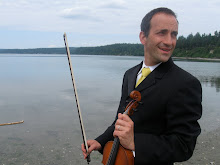
In the meantime, I am hoping to offer some informal gathering times for us at other times. To this end, I invite any families who are interested to join me at Castle Park on Friday, March 18, from 11:30 to 1pm or so (I have to be back to teach 4th grade violin at 1:05). Let us not try a potluck; just bring a picnic for your family. If, of course, you have a lot of extra nettle salad or kale carpaccio (or something else) you want
to share with others, that is lovely, too.
On Friday, March 25, from 9 to 10:30am, all nursery and parent & child families and friends in the community and visitors are invited to our early childhood Spring Festival. I will post more details soon.
And, yes, as the days lengthen and bathrooms open, I will offer more gatherings that are easier to attend for folks who work 9 to 5 (or 6 to 2).
In our open discussion after last Tuesday's talk, we talked a good deal about manners--about what seems the right amount of politeness to expect from our young children. In hoping that parents would make decisions that would work for their families, I gave stories of Michaela Gloeckler and Helle Heckmann, two experienced and strong and wise lecturers about Waldorf education. I have seen Dr. Gloeckler lecture many times, and I was fortunate to have Helle Heckmann observe my class and share her frank opinions with me (I am very proud of the one compliment she paid me) last year.
In a workshop with a number of experienced early childhood teachers, Dr. Gloeckler caused a stir by suggesting we refrain from correcting a child's speech in the first seven years. Some of this we were already doing by course (not singling out a 3 year old to point out she or he is saying a word in a less traditional way--as the endearing version of my name--Wooleyman--that circulates among the nursery suggests), but many Waldorf early childhood teachers (me included, though I was not so experienced at that point; I had learned from experienced teachers) would routinely speak polite language for a child to model it. If a child puts an empty bowl toward a teacher with no words or "More Soup!," the teacher might say, "May I have more soup, please? Yes, you may have more soup." (The teacher is speaking to herself or himself--or really, to the collective we that still obtains in groups of young children; the teacher avoids singling out the child). Gloeckler seemed to create a stir by suggesting that even this practice interfered with a healthy development of a child's sense of speech--Gloeckler is rigorous and has high expectations for teachers, one of which is we work out of imitation and not explanation in the first 7 years. She does not come across as someone who wants Waldorf graduates to be impolite slackers; she expects teachers to approach this work in an acutely aware age sensitive way (something I fall short of often by bringing explanation into my work).
In the article, you will notice Gloeckler chiding parents for correcting their children for presenting a left hand rather than a right hand to shake a doctor's hands in the first seven years--not because she does not want children to be polite, but because she has very high expectations of how we adults will work through imitation and not explanation to bring this about. Note, also, that the child was being polite already by offering a hand.
When Helle Heckmann came to observe my nursery, she felt I could expect much better manners of 2 and 3 year olds, that they could sit at a snack table without wiggling or going on their knees or complaining about soup. Her opinion was that if a child doesn't like soup and is fussing and fidgeting, we are feeding the child too much; she is used to seeing children getting hungry and tucking in to every meal they are served--a different perspective from a different country. In this light, she seemed to imply that we could give all sorts of verbal redirection at the table, even with young children, to guide them towards politeness.
Now the one compliment Heckmann paid me was when two of my students were struggling over one of my Bissells and I allowed them to continue their struggle for a good long time without intervention (I knew the children really well and knew that if one struck another they would be able to bounce back quickly like the ducks Eckhart Tolle describes and move on with their relationship; I knew they were a really even match). She lamented that she so rarely sees teachers in America really letting students struggle in their play. I give this picture to make clear that Heckmann does not want us micromanaging our children's actions throughout the day. She also told stories of being 2 and being allowed to ride her tricycle all over Denmark with a lot of freedom (different times, perhaps) and encouraging us to allow children to have this experience to.
Both Gloeckler and Heckmann are asking us, I think, to look for the right balance of form and freedom--for Heckmann, she feels freedom comes a great deal in creative play and working out conflicts without overly intellectual adult solutions; but when an activity is supposed to be formed (a meal, a story), we teachers and adults should have very high expectations for young children to be polite and part of that form. For Gloeckler, I think, form comes from the adult being present and aware and truly worthy of imitation (which is intimidating). If our child or children seem excessively rude or impolite, Gloeckler would--I believe--have us examine our own actions and attitude and see what we can alter in how we approach the world to make ourselves a more effective role model for our children.
As I said last Tuesday, I am always working to find the right balance. If I have a 4 year old who loves school but feels too intimidated to speak to me or to speak in front of a large group, and she eats all the snacks, and tentatively pushes her bowl toward me for a second helping, I may well serve her with a smile (if she could bear that much direct attention) and no words. I remember seeing a 5 year old boy throw a bag of organic popcorn at his mother's head so she would open it; in this case I would probably feel less reserved about saying something or setting a verbal limit. In my classes, I sense that some children need me to be more direct (they are perhaps being silly in an attempt to gain attention as a clown) while other children benefit more from being allowed to be in a world of nonverbal education (and I give them their rice with as much care as I can, with possibly no words).
We had rich discussions during both the first and second hours of our nursery and parent & child talk last week. During our parent support discusssion, we talked about sleep, and I gave divegent perspectivess from various wise human beings. Here is an article from Susan Johnson, a doctor and a mom who took Waldorf training.
Please remember that you are invited to a talk and discussion on the power and perils of praise--with insights gleamed from Virginia Woolf--this coming Tuesday from 6 to 7pm. From 7 to 8pm parents will discuss forming a support group or groups.
Intrinsic Motivation, Brain Research, and Virginia Woolf's Three Guineas
Butterfly Classroom
Whidbey Island Waldorf School
Tuesday, March 1, 6 - 7pm
(from 7-8pm there will be a discussion about forming a parent support group or groups)
"All this pitting of sex against sex, of quality against quality; all this claiming of superiority and imputing of inferiority, belong to the private-school stage of human existence where there are 'sides,' and it is necessary for one side to beat another side, and of the utmost importance to walk up to a platform and receive from the hands of the Headmaster himself a highly ornamental pot."
— Virginia Woolf (A Room of One's Own)
Articles on the research of Carol Dweck on the inverse power of praise have resonated with parents in parent & child classes on Whidbey Island and in Baltimore. Motivated parents have shared the article with friends and relatives. Several parents have requested a talk on tricky subject of praise, what to say instead if--following Kim Payne--we want to avoid spewing "Good Job!" all over the place, and what might be exceptions. In this lecture and discussion, William Dolde will review Dweck's research and try to offer insights into how to enable the research to help us rather than paralyze us. He will also weave in Virginia Woolf's wisdom from her 1938 non-fiction work Three Guineas (with some reference to the earlier A Room fo One's One) to explore some of the reasons why our culture tends to be asleep to common phrases of judgment such as "Good Job!" or "Is he a good baby?"
Various parents have expressed a wish to start a parenting support group, and from 7 to 8pm we will have a discussion of what forms this could take--from meeting at a coffee shop during school to meeting with a teacher at night. Parents should also feel free to bring any questions about children and parents to this second hour, and we will use our collective wisdom to try to provide paths toward finding answers. This second conversation need not revolve around praise and its alternatives.
To prepare for the first hour, you may wish to read the following two articles:
"How Not to Talk to Your Kids: The Inverse Power of Praise," by Po Bronson
Mia Michael, a kindergarten teacher I worked with and learned a great deal from when I was a Waldorf kindergarten teacher in Monterey a decade ago, shared the above article with me--a gift she had wanted to share with me after not seeing me for many years. It resonated a great deal with me, and I wanted to share it with you. While we do not per se relate classic mythic stories in the nursery or parent & child class (an image of the nursery I received when I first came to Waldorf education in the 90s was that the nursery teacher is like a sturdy farmer or woodcutter or cobbler or blacksmith, welcoming these young and heavenly children to the earth with tangible work done with warmth and love. It is then the kindergarten and grades teachers in a Waldorf school who use stories to remind children of the spiritual world above and beyond and before and after and through and in the manifest world of rain pants and snow days, lunch baskets and pencil sharpeners), I share it for those interested in thinking how the curriculum over the years in a Waldorf School will meet our children at different developmental stages. The article also helps me to think about the stories that resonate with and within me at this point in my life's journey.
It might be a great article to read before you attend the talk on adolescence and the middle school curriculum on Wednesday, February 16, at 6:30pm.